Tea in Zen and Pottery
Tea and pottery and Zen are not three separate things. They meet in a single Japanese idea: ichigo ichie, one encounter in one lifetime. This post explores that meeting point, through two teachers who asked what it means to be fully present in the moment you are holding.

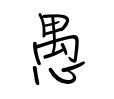
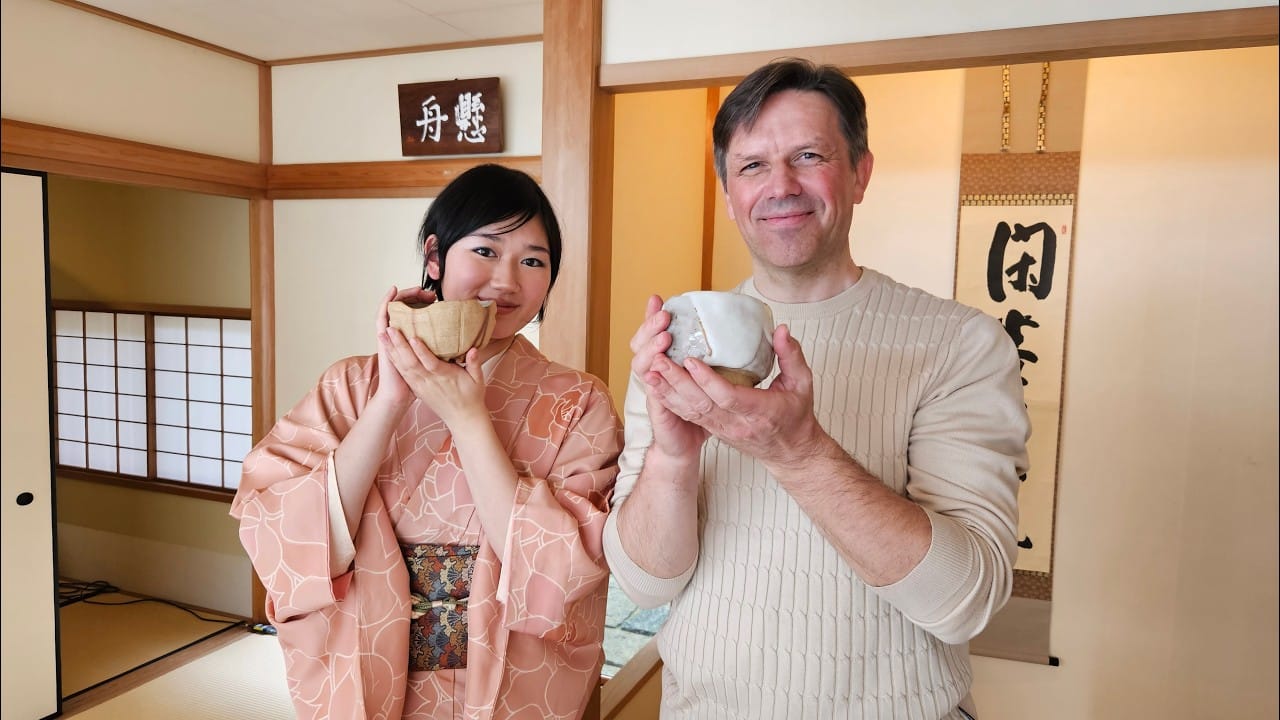
When I asked my friend Abbot Sasaki what connections he saw between Zen and pottery, he was genuinely puzzled. "What could that be?" he replied, scratching his head. He had never thought of it before. I confess I feel a small, quiet pride in those moments, when I can point something out about Japanese culture to the Japanese themselves. After nearly four decades of living here, you develop a perspective that natives rarely have the luxury of. In Swedish we have a word for this: hemmablind – "home blind." It means you are standing so close to something that you can no longer see its depth. The familiar becomes invisible.
In these posts, I will explore the Zen in pottery and the pottery in Zen. The two are inseparable, and their meeting point is what the Japanese call ichigo ichie (一期一会), "one time, one meeting," or more fully: one encounter in one lifetime. It is a concept born at the heart of the tea ceremony, and it quietly holds together tea, pottery, and Zen into something larger than any of the three alone.
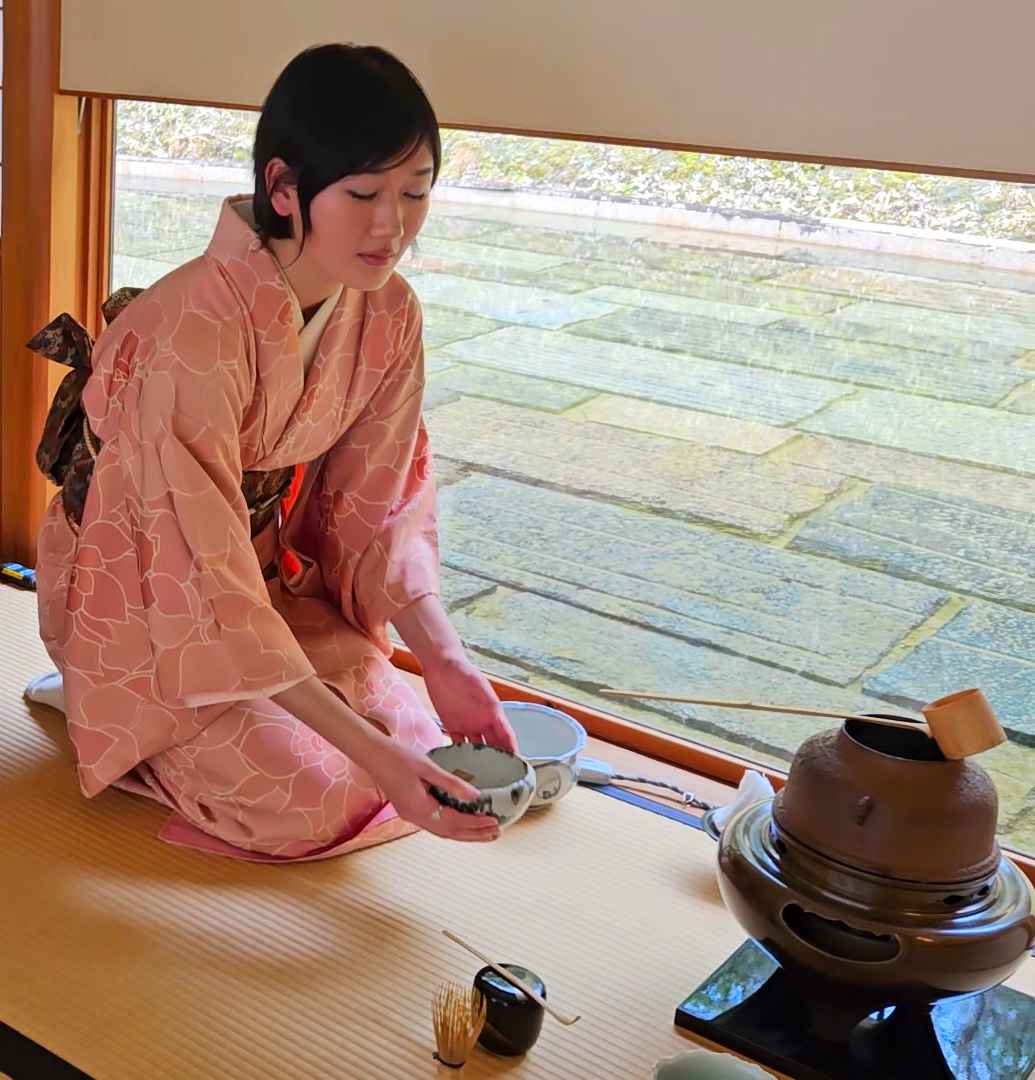
The idea is simple but enormous. Every gathering around the tea bowl is unrepeatable. The particular quality of light that afternoon, the weight of the bowl in your hands, the exact people in the room, the silence between words – none of it will ever be assembled again in quite that way, not once more in the entire history of the universe. Ichigo ichie is not just a nice thought. It is a call to pay full attention, right now, to this.
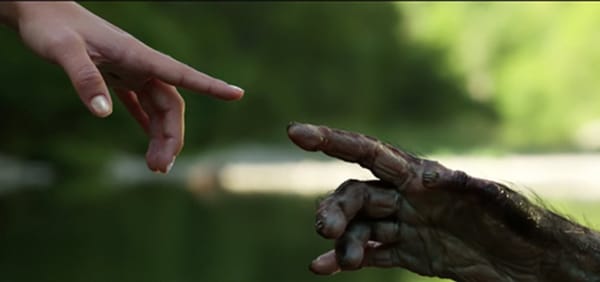
And that call extends further than the tea room. Think of the truly magical meetings in your life – not just with people, but with a sudden view of a mountain in mist, a thought that changed you, the eyes of an animal meeting yours across a quiet room. This is where an old Zen story enters.
A monk once walked up to Master Jōshū and asked: "Does a dog have Buddha-nature?" It sounds like a yes-or-no question. But Jōshū did not say yes, and he did not say no. He said: Mu. In Japanese, mu (無) means "nothing" or "not," but here it was not an answer – it was a door. Jōshū was pointing at something that cannot be caught in words: stop trying to sort life into boxes. Every living thing meets you completely, in this moment, as what it is. To me, this is ichigo ichie at its most essential. Scholars argue endlessly over what Jōshū truly meant — and that, perhaps, is exactly the point.
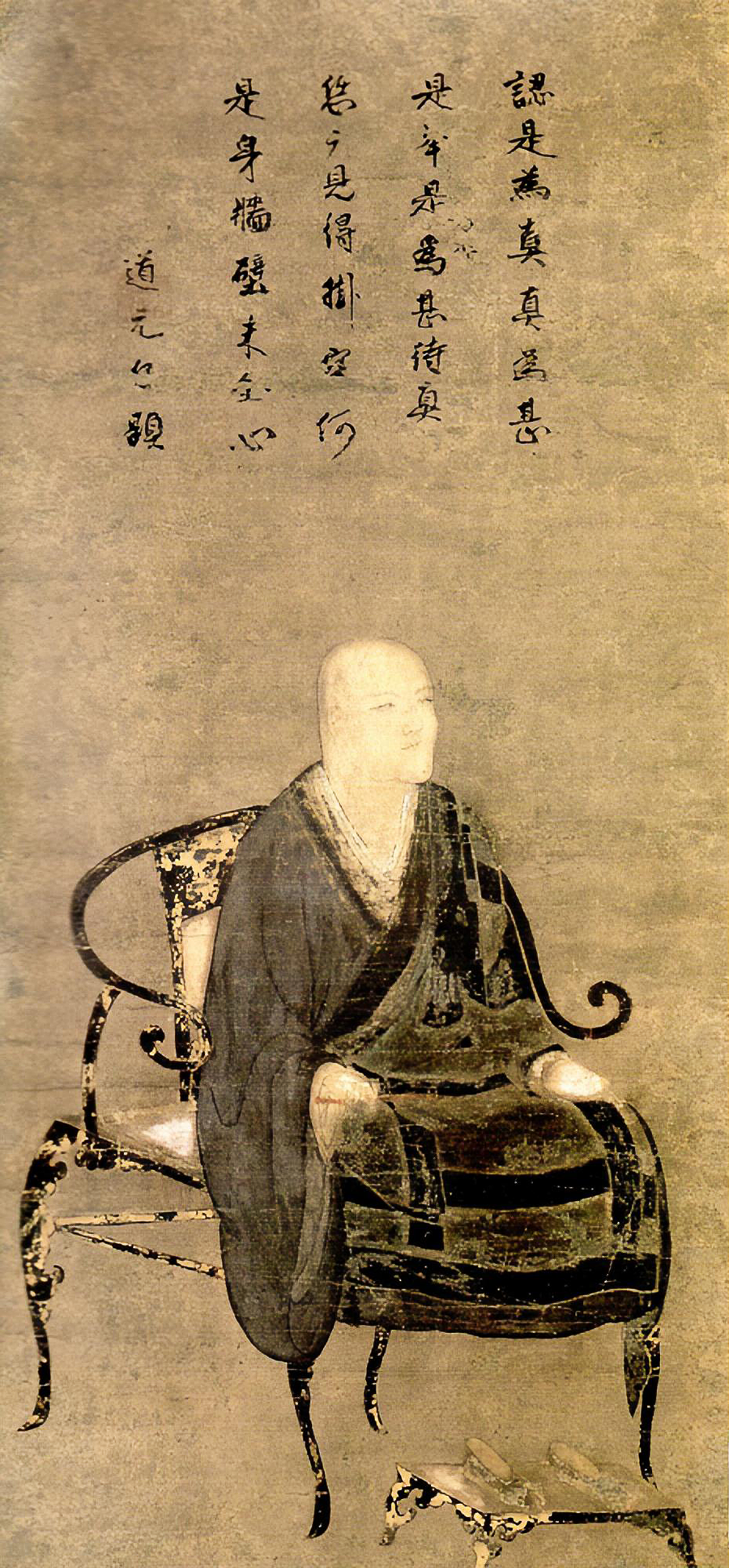
Centuries later, Dōgen returned to that same story in his Shōbōgenzō ("Treasury of the True Dharma Eye") and pushed the question open even wider. Where earlier teachers had debated whether beings possess Buddha-nature – as a seed hidden inside, waiting – Dōgen dissolved the frame entirely. Buddha-nature is not something tucked inside things. It is what things are, expressed fully in each moment of their existence. The dog meeting your gaze. The tea bowl imperfect from the kiln. The crack in the glaze. Scholars have long wrestled with what Dōgen precisely meant, and that wrestling is itself a kind of practice. But in the tea room, the argument quiets. Nothing is concealing anything. Everything is already here.
Nothing distills this sense of unrepeatable significance into a single breath of time like the tea ceremony. It is a ritual built around one idea: this will never happen again. If you are a Japanese potter, or someone drawn to Japanese pottery, you may already feel this, even if you have never named it. If you walk the path of Zen, you will recognize it immediately. And if you are new to all of this – welcome. You are in the right place.
Welcome to the world of presence in the moment: in tea, in Zen, and in pottery.
 Contributors to Wikimedia projects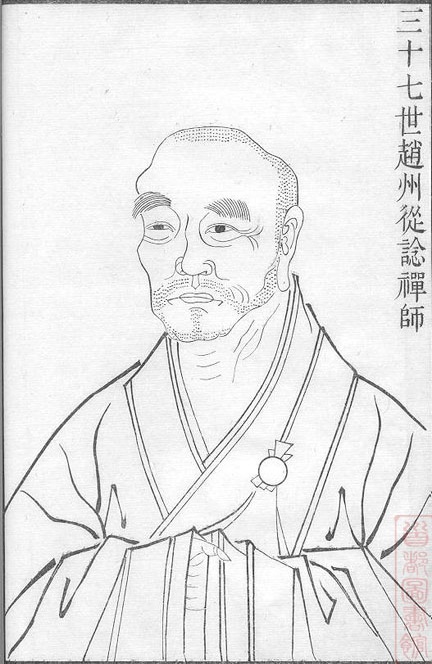
 Contributors to Wikimedia projects